

Our Guide to ISO 56000
For a long time, innovation inside large organizations worked like this: someone senior would announce an "innovation initiative." There'd be a workshop. Post-it notes would cover a wall. A consultant would say the word "ideation" fourteen times. Then everyone would go back to their desks, and nothing would change.
That is innovation theater. It looks like progress. It feels productive.
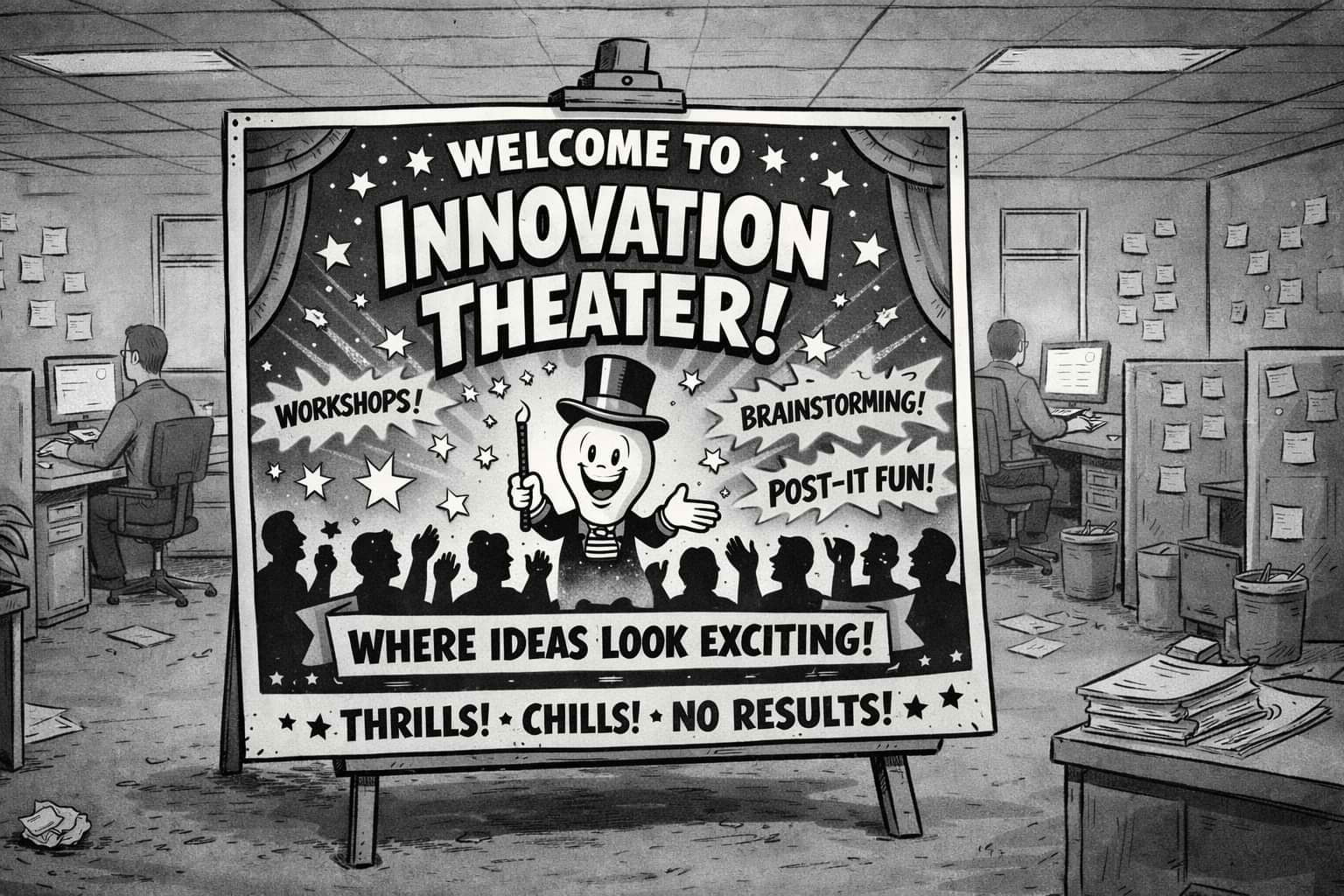
The ISO 56000 series of international standards exists because enough people got tired of vague innovation theatre. It's a family of standards that gives organizations a shared language and a structured framework for managing innovation the way they manage quality, or finance, or supply chains.
Not by standardizing the ideas themselves, but by standardizing the systems that turn ideas into results.
More Than Ideas
The ISO 56000 series goes well beyond collecting ideas. It's a modular toolkit for the parts of innovation that most organizations handle poorly or ignore entirely.
ISO 56005 covers intellectual property management, which matters the moment your ideas start becoming products. ISO 56006 addresses strategic intelligence, helping you scan the environment for signals that shape where to invest your effort.
ISO 56003 provides a structure for innovation partnerships, which is where a surprising amount of value gets created and an equally surprising amount gets lost.
There are also standards for measuring innovation performance and assessing your current capabilities.
The Big Tension
Here's the honest part. Standards and creativity exist in tension.
Too much governance and your innovation pipeline becomes a bureaucratic obstacle course. Too little structure and you're back to post-it notes and wishful thinking. The organizations that get this right find a balance between rigorous process and the breathing room that creative work requires.
A common language helps here. When your team in Berlin and your team in São Paulo use the same terms and follow the same framework, collaboration gets faster. When investors and supply chain partners see that you follow internationally recognized practices, trust goes up.
But the standard only works if you use it to enable your people, not to constrain them. The goal is a system that makes it easier to move from idea to action, not harder.
What Implementation Looks Like
Adopting ISO 56000 is not a weekend project. It asks for cultural change and operational discipline at the same time.
You'll need to make choices. Which software platforms will you use to digitize your stage-gate workflows? Do you bring in consultants to bridge the gap between abstract principles and your specific context? Where does your organization sit on the maturity scale today?
Some organizations start with a self-directed alignment using the guidance documents. Others go straight for external validation through the certification process, which is evolving as accredited bodies build out their programs. The right answer depends on where you are now and how fast you need to move.
Why This Matters Now
Markets are volatile. Product cycles are getting shorter. The organizations that build systematic innovation practices are better positioned to respond when conditions shift. Not because they predicted the future, but because they built a system that handles surprises well.
ISO 56000 gives you that system. It establishes a common language across departments, geographies, and partnerships. It makes your innovation efforts measurable and improvable.
It signals to the market that you treat innovation as a core business function, not a side show.
The series won't write your ideas for you or turn bad ideas good. What it does is give good ideas a fighting chance by making sure the organization around them is set up to carry them forward.
If you're still running innovation workshops that produce nothing but photo ops, this is the off-ramp. Your ideas deserve a system. Ideanote helps you build one.
Smart and Easy Idea Management

