

AI Duplicate Detection For Ideas Across Teams And Languages
Use AI embeddings to spot similar ideas across teams and languages. Flag duplicates and merge submissions while preserving all details.
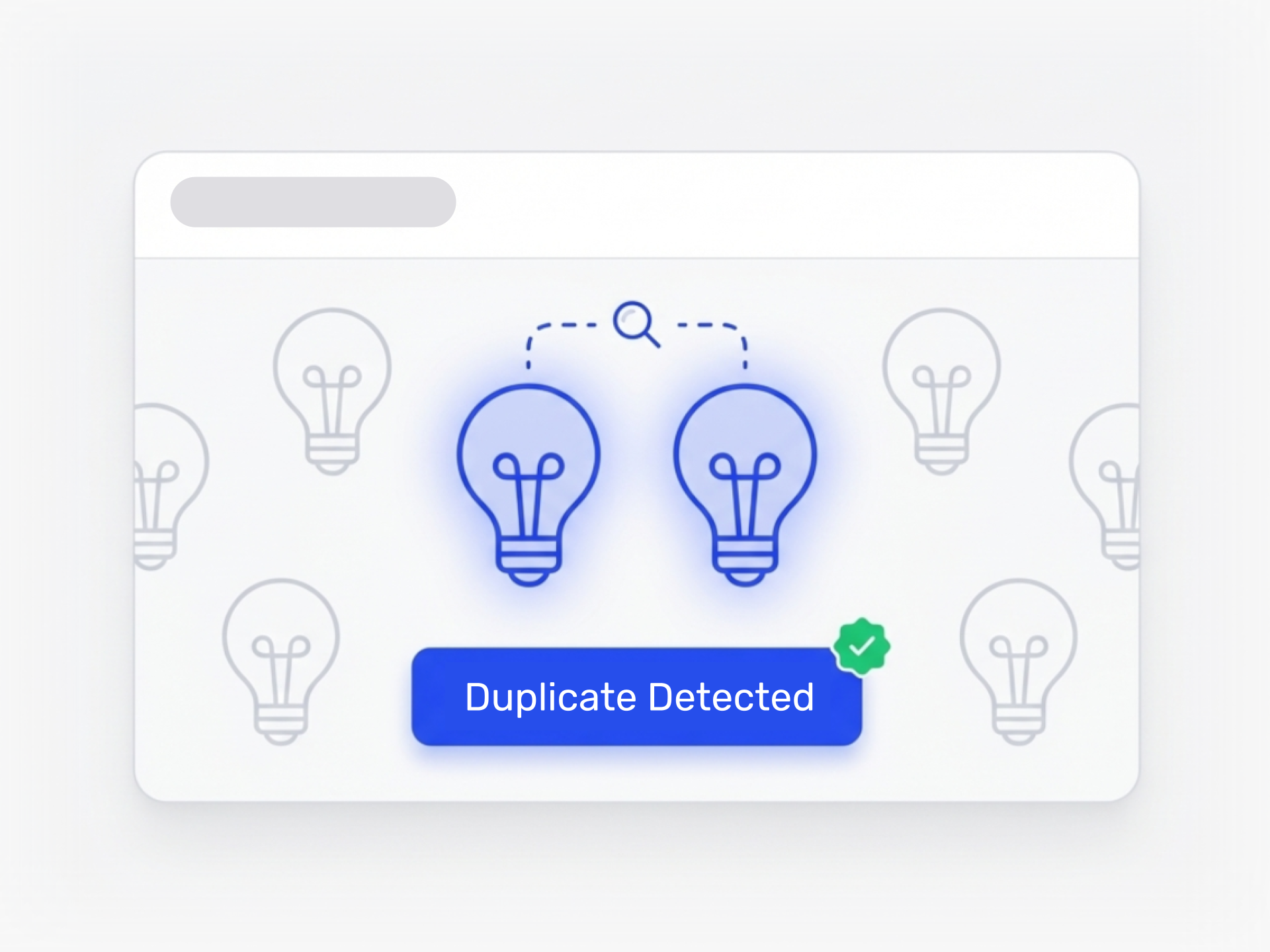
How Do You Manage Duplicates When Ideas Come From Every Team?
When you collect ideas across your organization, the same solution often appears from different teams. One department in London submits an idea. Another team in Tokyo submits the same concept. Your system now holds duplicate entries, and you miss the signal that this idea matters to multiple groups.
Ideanote automatically analyzes every submission and creates an AI embedding. This means the system compares ideas across languages and teams. If someone in France submits the same idea as someone in Riyadh, Ideanote flags the match.
You see which ideas appear multiple times. You decide which duplicates to merge. When you merge two ideas into one, Ideanote preserves all comments, votes, attachments, and contributor credit from both submissions. Nothing gets lost.
What This Means for Your Process
You go from 1,000 submissions to 300 distinct ideas, then down to 30 concepts that deserve attention. You reduce duplicate work before teams start building the same thing twice. You identify which solutions resonate across your organization, not because someone said so, but because the data shows multiple teams arrived at the same answer.
Ideanote helps you find the ideas that matter by showing you where your organization naturally agrees.
How Does Ideanote Detect Duplicate Ideas Across Different Teams?
Ideanote analyzes every submitted idea and creates an AI embedding. This allows the system to compare ideas based on their meaning, not just keywords. When someone submits an idea that resembles one already in the system, Ideanote flags the match for review.
The detection works across all teams and departments, so you see when different groups independently arrive at the same solution. This helps you identify both duplicate work and emerging trends in what your people think matters most.
Does Duplicate Detection Work if Ideas Are Submitted in Different Languages?
Yes. Ideanote creates embeddings that represent the meaning of an idea, regardless of the language used. If someone in France submits an idea in French and someone in Japan submits the same concept in Japanese, the system will flag them as potential duplicates.
This cross-language detection helps global organizations spot common themes and avoid running parallel projects without knowing it.
What Happens When Ideanote Flags Two Ideas as Duplicates?
When the system flags a match, you decide what to do next. You have full control over whether to merge the ideas, link them together, or leave them separate if they turn out to be different after review.
If you choose to merge, Ideanote combines the submissions into one idea while preserving all details, comments, and contributors from both original entries. This ensures no information or credit is lost in the consolidation process.
How Do Merged Ideas Move Through the Evaluation Process?
Once merged, the ideas become a single entry in your system. This combined idea moves through your evaluation stages as one unit, carrying all the engagement, comments, and details from both original submissions.
The merge preserves attribution for all contributors, so everyone who submitted or commented on either version gets credit for their input on the consolidated idea.
Does Ideanote Prevent Duplicate Submissions Before They Happen?
The system flags duplicates after submission, when it analyzes the idea against your existing collection. While Ideanote does not block submissions in real time, the detection runs automatically on every new entry.
This approach ensures people submit their full thinking first, then you review flagged matches to decide which ideas truly overlap and should be consolidated.
How Does Duplicate Detection Help With Large Volumes of Ideas?
When you collect hundreds or thousands of ideas, duplicate detection helps you identify which concepts appear repeatedly across your organization. This reveals what people think about most and where energy is naturally focused.
By merging duplicates, you reduce noise and surface the concepts that matter. A collection of 1,000 raw submissions might consolidate down to 300 distinct ideas, then further down to 30 core concepts worth investing in.
What Information is Preserved When Ideas Are Merged?
Merging retains all comments, attachments, votes, and contributor information from both original ideas. The combined entry shows the full history and engagement from each submission.
This means you keep the complete record of who thought of what and when, along with all the discussion and refinement that happened on each version before they were consolidated.
Harness the power of artificial intelligence to accelerate the way your business innovates, from ideation to implementation.




Smart and Easy Idea Management
Talk to our Experts or try Ideanote for free. No credit card required.

