

Ping. We found two similar ideas.
Let our AI discover and pinpoint similar ideas across languages — never build the same thing twice and explore trends with ease.
What Happens When 3,000 Ideas Turn Into 300 You Can Act On?
Your team submits ideas across departments, regions, and languages. Different people describe the same feature request in different ways. Before long, your innovation backlog becomes cluttered with duplicates and near-duplicates. Prioritization slows down. Decisions get harder.
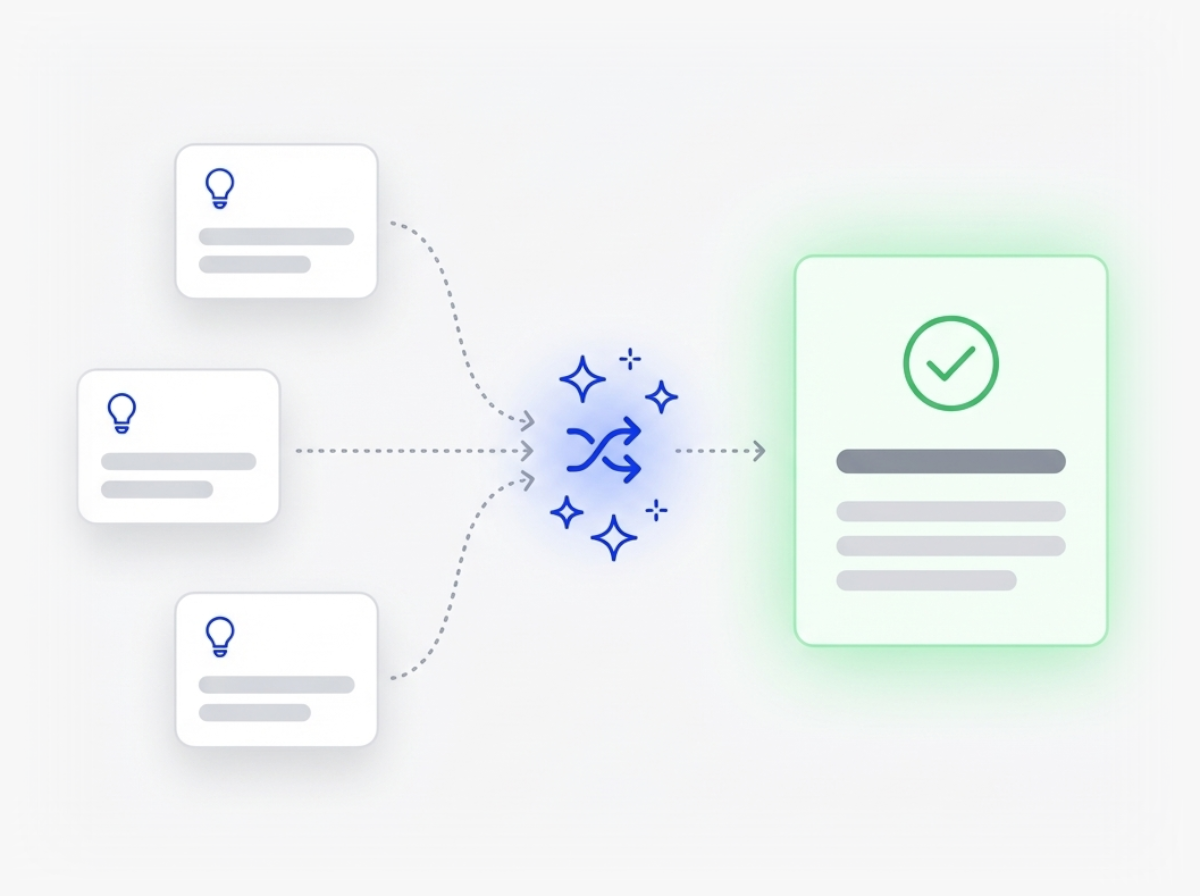
Ideanote's AI Idea Merge helps you clean up overlapping ideas and consolidate them into one clear entry. Start in the cluster view, where AI groups similar ideas automatically and shows you which ones belong together. Select two or more ideas, click Merge, and review the consolidated version.
The AI generates a merged description that combines details from all original ideas while removing redundant elements. If the ideas come from different collections, you choose where the merged idea belongs. Original submitters become co-owners of the new idea, so attribution stays intact. The original ideas move to your archive, marked as merged.
This process works across languages. You go from thousands of submissions to a focused set of priorities. Your team spends less time sorting through clutter and more time evaluating ideas that matter.
Ideanote handles AI compliance and security according to best practices. Your data is not used for training, not reviewed by humans, and not logged by our AI provider.
How Does AI Identify Similar Ideas?
Ideanote uses AI embeddings to analyze the content and meaning of your ideas. The system compares descriptions, titles, and details to find ideas that address the same problem or propose similar solutions. You see this visually in the cluster view, where similar ideas group together automatically.
The AI works across languages, so an idea submitted in German and another in English about the same topic will still show up as similar. You review the suggestions and decide which ideas to merge.
What Happens to the Original Ideas After Merging?
The original ideas are archived, not deleted. They remain in your system for reference but are marked as merged and no longer appear in your active idea lists. This keeps your audit trail intact while cleaning up your workspace.
If the original ideas had different owners, those people become co-owners of the new merged idea by default. Everyone who contributed keeps their connection to the final version.
Where Does the Merged Idea Live?
If all original ideas come from the same collection, the merged idea stays in that collection. If the original ideas come from different collections, you choose which collection the merged idea joins during the merge process.
The merged idea follows the idea form structure of its destination collection, so all required fields and custom attributes stay consistent with your workflow.
How Do You Merge Ideas From Different Collections?
You select the ideas you want to merge from the cluster view or any list view. When you click "Merge," a panel opens showing all original ideas on the left side. The AI generates a consolidated description on the right that combines details from all sources.
If the ideas come from different collections, you select which collection the merged idea should join. The AI adapts the merged description to match the idea form of that collection.
How Do You Prevent Duplicate Submissions in the First Place?
The cluster view shows you which ideas are similar as soon as they arrive. You see groupings and linkages automatically, so you spot duplicates quickly before they pile up. This lets you merge early and often, keeping your idea pipeline clean from the start.
The AI runs continuously in the background, updating clusters as new ideas come in. You decide when to merge based on what you see, giving you control over how you consolidate.
How Many Ideas Are You Able to Merge at Once?
You select multiple ideas from the cluster view and merge them all in one action. The AI panel shows two, three, five, or more original ideas on the left and generates one consolidated version on the right.
This makes it practical to go from thousands of ideas to hundreds, or from hundreds to your top 30. The process scales to the volume you need to manage.
Is the AI Merge Process Secure and Compliant?
All AI processing follows best-practice compliance standards. Your data is not used for training, and no human reviews your content. Nothing is logged by the AI provider.
Full details are available on our security and compliance page, including our AI-specific policies and documentation.
Do Merged Ideas Keep Their Scores or Ratings?
The merged idea is a new entry, so it starts fresh in terms of scoring and evaluation. The original ideas, with their scores and history, remain archived for reference. This gives you a clean slate to prioritize the consolidated version without legacy data skewing your decisions.
Harness the power of artificial intelligence to accelerate the way your business innovates, from ideation to implementation.


Smart and Easy Idea Management
Talk to our Experts or try Ideanote for free. No credit card required.

