


.svg)
تطبيق ISO 56007 لإدارة الأفكار
لا تفتقر معظم المؤسسات إلى الأفكار. ما ينقصها هو طريقة منظمة لتحديد الأفكار الجديرة بالمتابعة. يحل معيار ISO 56007 هذه المشكلة.
كل مؤسسة عملت معها تواجه نفس المشكلة. اطلب الأفكار من الناس وستحصل على المئات. اسأل عن أي منها يجب تنفيذه، وسيسود الصمت في الغرفة. أو الأسوأ من ذلك، يفوز الشخص الأكثر صخبًا.
تعتبر "المرحلة الأولية الغامضة" للابتكار، وهي الفترة الفوضوية بين ملاحظة مشكلة واتخاذ قرار بحلها، المكان الذي تموت فيه معظم الأفكار الجيدة. تضيع في سلاسل البريد الإلكتروني، أو تُدفن في جداول البيانات، أو تُقتل من قبل اللجان قبل أن يختبر أي شخص ما إذا كانت ستنجح.
نُشر معيار ISO 56007 في عام 2023 كجزء من عائلة ISO 56000، ويوفر للمؤسسات معيارًا عالميًا لهيكلة هذه المرحلة المبكرة. ويغطي الأدوات والأساليب لإدارة الفرص و الأفكار. ويرسم خطًا واضحًا: يتولى معيار ISO 56007 كل شيء حتى النقطة التي تقرر فيها تطوير شيء ما. أما البناء الفعلي؟ فهذا هو ISO 56002.
متى تحتاج هذا المعيار
ISO 56007 هو معيار إرشادي. لا يخبرك بما يجب ابتكاره، بل يخبرك بكيفية التعامل مع تدفق الأفكار الخام حتى لا تهدر الوقت والمال على الأفكار الخاطئة.
تحتاجه عندما يكون خط أنابيبك مليئًا بالضوضاء. عندما يولد فريقك الكثير من الأفكار ولكنه يكافح لفصل الأفكار القوية عن الضعيفة. عندما تكون غارقًا في الطلبات ولا يتفق أحد على كيفية تقييمها.
تحتاجه أيضًا عندما تعمل عبر الفرق أو مع شركاء خارجيين. يبدو الابتكار المفتوح رائعًا حتى تدرك مؤسستان أن لديهما تعريفات مختلفة تمامًا لـ "الفكرة المعتمدة". يمنح معيار ISO 56007 الجميع إطار عمل مشتركًا.
ينطبق المعيار على المؤسسات بجميع أحجامها. الشركات الناشئة، الشركات متوسطة الحجم، الشركات الكبرى. إنه يعمل على التحسينات التدريجية والرهانات الجذرية. الهدف هو تقليل عدم اليقين قبل تخصيص موارد جادة.
التمييز الرئيسي: يتوقف ISO 56007 عند الاختيار للتطوير. لا يغطي البناء أو الإطلاق. هذا الحد مهم لأنه يبقي المعيار مركزًا على الجزء الذي تخطئ فيه معظم المؤسسات.
كيف تبدأ
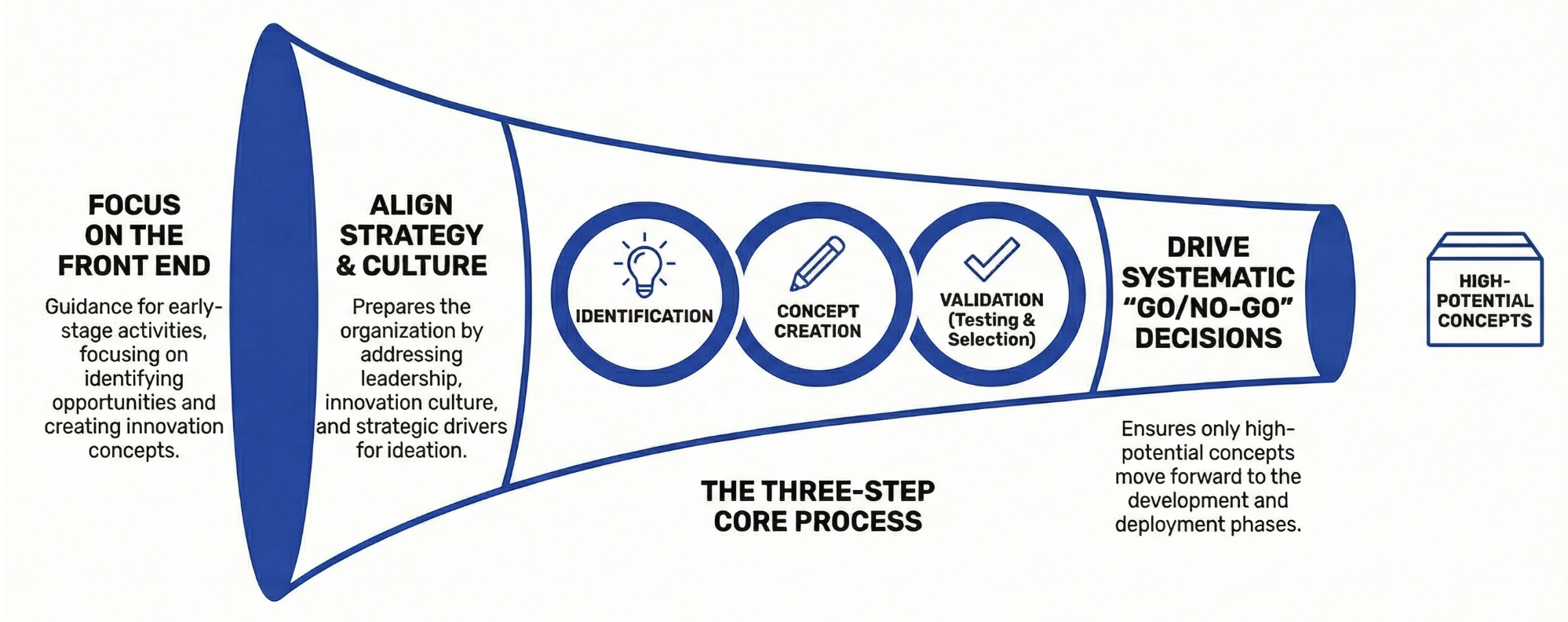
يعني تطبيق ISO 56007 الانتقال من العصف الذهني العشوائي إلى عملية أمامية منضبطة. ثلاث خطوات توصلك إلى هناك.
1. حدد نية الابتكار لديك
قبل أن تجمع فكرة واحدة، وضح لماذا تبتكر. يؤكد ISO 56007 على الاستعداد للأنشطة الأولية من خلال وضع شروط مرجعية وفهم الدوافع وراء جهود الابتكار لديك. وهذا يضمن أن الأفكار تعالج فجوات استراتيجية محددة بدلاً من أن تصل كاقتراحات عشوائية لا علاقة لها بأهدافك.
2. وضع حوكمة للمرحلة الأولية الغامضة
يجب أن يكون هناك من يتحمل مسؤولية تدفق الأفكار. حدد من يراجع الطلبات. ضع معايير لنقل الفكرة من مفهوم مبدئي إلى اقتراح معتمد. اجعل القيادة تحدد بوضوح مدى المخاطرة المقبولة. بدون حوكمة، تعود العملية إلى من يصرخ بصوت أعلى.
3. إجراء تحليل الفجوات
انظر إلى كيفية تعاملك مع الأفكار اليوم وقارنها بالمعيار. هل لديك خطوة لتحديد الفرص قبل توليد الأفكار؟ هل تتحقق من صحة المفاهيم قبل الالتزام بالتطوير الكامل؟ معظم المؤسسات لديها فجوات في واحد على الأقل من هذه المجالات. العثور عليها يخبرك أين تركز أولاً.
إطار عمل ISO 56007: ثلاث مناطق للنشاط
يصف المعيار عملية غير خطية ومتكررة تتضمن ثلاث مناطق للنشاط. تتغذى هذه المناطق على بعضها البعض لإنتاج مفاهيم ابتكارية قابلة للتطبيق.
1. التحديد (اكتشاف الفرص)
يبدأ الابتكار بتحديد الفرص، وليس الأفكار. هذا يعني البحث عن الاتجاهات، وتحولات السوق، واحتياجات العملاء غير الملباة باستخدام الذكاء الاستراتيجي (المتوافق مع ISO 56006). ويعني تحديد المشكلة أو مجال الفرصة بوضوح كافٍ بحيث يظل كل شيء لاحقًا مركزًا.
2. إنشاء المفهوم
بمجرد تحديد فرصة، قم بتوليد الأفكار وتطويرها إلى مفاهيم. استخدم أساليب مثل العصف الذهني أو التفكير التصميمي لتوليد الأفكار. ثم أضف التفاصيل: عروض القيمة، تقديرات الجدوى، التأثير المحتمل. يوضح ISO 56007 أن الفكرة يجب أن تكون مطورة بما يكفي لتكون قابلة للاختبار قبل المضي قدمًا.
3. التحقق (الاختبار والاختيار)
هنا تكمن قيمة ISO 56007. يتطلب المعيار اختبارًا دقيقًا قبل بدء التطوير. قم بإجراء تجارب للتحقق من الافتراضات حول القيمة وسهولة الاستخدام والجدوى. ثم طبق معايير شفافة لتحديد المفاهيم التي ستنتقل إلى مرحلة التطوير. وهذا يمنع استنزاف الموارد في البناء على أسس ضعيفة.
لماذا تهم البرمجيات في ISO 56007
يتطلب المعيار معلومات موثقة وعمليات منهجية. جداول البيانات وسلاسل البريد الإلكتروني لا تكفي. أنت بحاجة إلى أدوات مصممة لهذا الغرض.
مركزية الفرص والأفكار
توفر المنصات مثل Ideanote و Wazoku مساحة عمل واحدة لجمع الأفكار من المصادر الداخلية والخارجية. وهذا يلبي متطلب ISO لنهج منظم لالتقاط المدخلات. عندما تعيش كل فكرة في مكان واحد، لا يضيع شيء وتتوقف الفرق عن تكرار الجهود.
أتمتة سير العمل
يملي ISO 56007 أن تنتقل الأفكار عبر مراحل. تتيح لك البرمجيات المناسبة تكوين مهام سير عمل تعكس الإطار: التحديد، التحقق، التطوير. تتيح أدوات مثل InnovationCast و Planbox تكوينات مراحل مخصصة، مما يضمن عدم تخطي أي خطوات. يرسل التوجيه الآلي الأفكار إلى خبراء الموضوع المناسبين بناءً على علامات المحتوى.
التحقق والتحليل المدعوم بالذكاء الاصطناعي
لمرحلتي إنشاء المفهوم والاختيار، يضيف الذكاء الاصطناعي ميزة جدية. تحدد ميزات التجميع وإزالة التكرار (مثل ربط الأفكار بالذكاء الاصطناعي من Ideanote) الأفكار المكررة وتدمج الطلبات الزائدة في مفاهيم أقوى وموحدة. يوفر تقييم الذكاء الاصطناعي تقييمات أولية حول الجدوى والتأثير، مما يساعد الفرق على تصفية أحجام كبيرة من الطلبات دون عنق الزجاجة.
المواءمة الاستراتيجية
تركز بعض المنصات على جوانب السياق وتحديد الفرص من خلال دمج المسح البيئي وإدارة الاتجاهات. وهذا يضمن أن الأفكار التي تدخل نظامك تتصل بالذكاء الاستراتيجي الخارجي، وهو متطلب لمرحلة التحديد في ISO 56007.
ما يؤول إليه هذا
يحول ISO 56007 إدارة الأفكار من تمرين إبداعي فضفاض إلى عملية عمل منظمة. ويقلل إطار العمل ثلاثي المناطق، التحديد وإنشاء المفهوم والتحقق، من خطر الفشل في مراحل التطوير اللاحقة عن طريق اكتشاف الأفكار الضعيفة مبكرًا.
يمنحك المعيار المنهجية. وتوفر لك برمجيات إدارة الابتكار البنية التحتية. ومعًا، يحولان المرحلة الأولية الغامضة للابتكار إلى نظام قابل للتكرار يقدم مفاهيم معتمدة وذات قيمة عالية جاهزة للتطوير.
بالنسبة للمؤسسات التي تستعد لمتطلبات شهادة ISO 56001 الأوسع، يعد اعتماد ISO 56007 خطوة أولى عملية نحو احترافية قدرتك الابتكارية.
منهج عملية الابتكار لديك.

