

Expand Ideas With Form Entries: Build Business Cases, Assign Owners, Track Progress
Add post-idea form steps to collect business cases, feasibility, KPIs and cost. Assign owners and track progress to project stage.<h3>Structured Post-Idea Steps</h3><p>Add forms later in the workflow to collect KPIs, costs, timelines, and ownership. Turn ideas into project-ready work.</p>
How Do You Move Ideas from Submission to Execution?
Your team submits ideas. Then those ideas sit. The path from submission to execution is unclear. Who owns this? Where is the business case? What about costs, timelines, and resources?
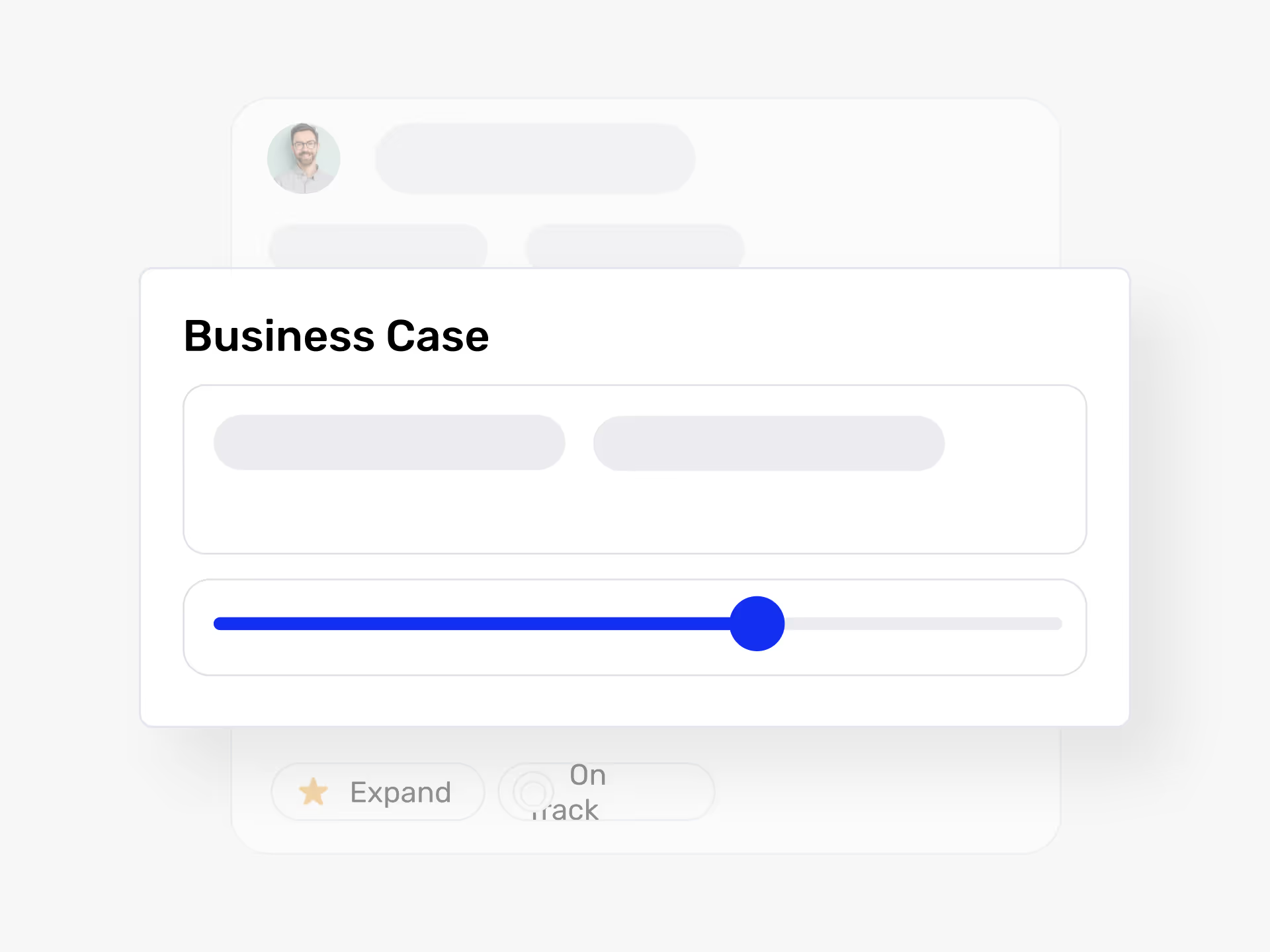
Ideanote lets you add form steps later in the workflow. After an idea is submitted and reviewed, you define what happens next. Add an expand phase where the idea owner or a specific person fills out a business case. Collect feasibility details, resource needs, ROI estimates, and start dates. Ask for KPIs, cost estimations, and project timelines.
You control the forms. Match your internal standards. Use the format your finance team expects. Gather input from multiple departments. Assign ownership so someone drives the idea forward. Track progress as ideas move from concept to pilot to project.
One customer asked: "Can expanded ideas include feasibility reviews, pilots, or business cases?" Yes. Another wanted to know: "Can additional fields be added when an idea is in the act or expand phase?" Yes. You add the fields you need, when you need them.
Ideas do not disappear into a suggestion box. They move through a defined process. You see who is responsible, what data has been submitted, and where each idea stands. The workflow you design matches how your organization works.
How do expansion forms work in the idea workflow?
You add an expand phase to your workflow where specific people fill out forms to move ideas forward. This happens after initial submission, when you need more detail for decisions.
The form collects structured information like business case details, resource requirements, timelines, or cost estimates. You choose who fills it out - the idea owner, a specific person, or a group.
What information do teams typically collect in business case forms?
Teams use expansion forms to collect feasibility assessments, ROI estimates, resource needs, and implementation timelines. You design the form fields to match your internal business case requirements.
You add custom fields for KPIs, cost estimations, start and end dates, or any data your decision process requires. The form structures this information so you can review and compare ideas easily.
Can we add fields or questions after an idea has already been submitted?
Yes. Expansion forms appear later in the workflow, not at submission. You set up forms that become available when ideas reach specific phases like evaluation or planning.
This approach lets ideas start simple and become more detailed as they advance. You collect only the information needed at each stage of your process.
How do we assign ownership for follow-through on ideas?
You designate who fills out expansion forms as part of your workflow. This assigns clear responsibility for moving ideas forward and completing required steps.
The form responses create an audit trail showing who provided information and when. You track accountability from idea selection through execution.
Can we collect input from multiple departments for a business case?
Yes. You decide who completes each expansion form - a single person, the idea owner, or a group. Different teams provide the information they own.
Each department fills out the sections relevant to their expertise. The complete form gives you cross-functional input in one place.
Can we use our existing Excel business case templates?
You recreate your template structure using custom form fields in Ideanote. Build forms with the same categories and questions your Excel template contains.
The information stays attached to the idea as it moves through your workflow. You view and compare data across ideas without switching between spreadsheets.
How do ideas transition from ideation to project tracking?
You set up expansion forms that collect project-level details like milestones, deliverables, and status updates. Ideas become projects as they move through your workflow and gather this information.
The same idea that started as a submission now holds all execution details. You track progress through phases like pilot, implementation, and completion within your workflow.
Can we track ROI and impact after implementation?
You add fields to your expansion forms for impact metrics, outcomes, and ROI data. Teams fill these out during or after implementation.
The data stays with the idea record. You review actual results against initial estimates and generate reports on innovation performance.

Gestion d'idées intelligente et facile
Contactez nos Experts ou essayez Ideanote gratuitement. Aucune carte bancaire requise.

